Details
- Type: eLearning vocabulary practice module (sample of a full-scale course)
- Audience: Adult virtual learners
- Client: A language school in Tunisia
Tools
- Articulate Storyline 360
- Canva
Skills
- eLearning Development
- Multimedia Design
- Gamification
- Active Learning Strategies


The Problem
A Tunisian language school found that students wanted additional, independent practice with vocabulary beyond their online tutoring sessions. Learners needed a way to review words at their own pace, reinforce retention, and apply them in realistic contexts.
The Solution
I designed an eLearning module that provides students with multiple opportunities to learn, practice, and apply Tunisian Arabic vocabulary in an active and engaging way. It was also important to have the activities open for students to practice at their own pace since the learners are at various levels in their language journey. The course is structured around real-world scenarios such as shopping at a local market, making the practice both meaningful and motivating for the learners.
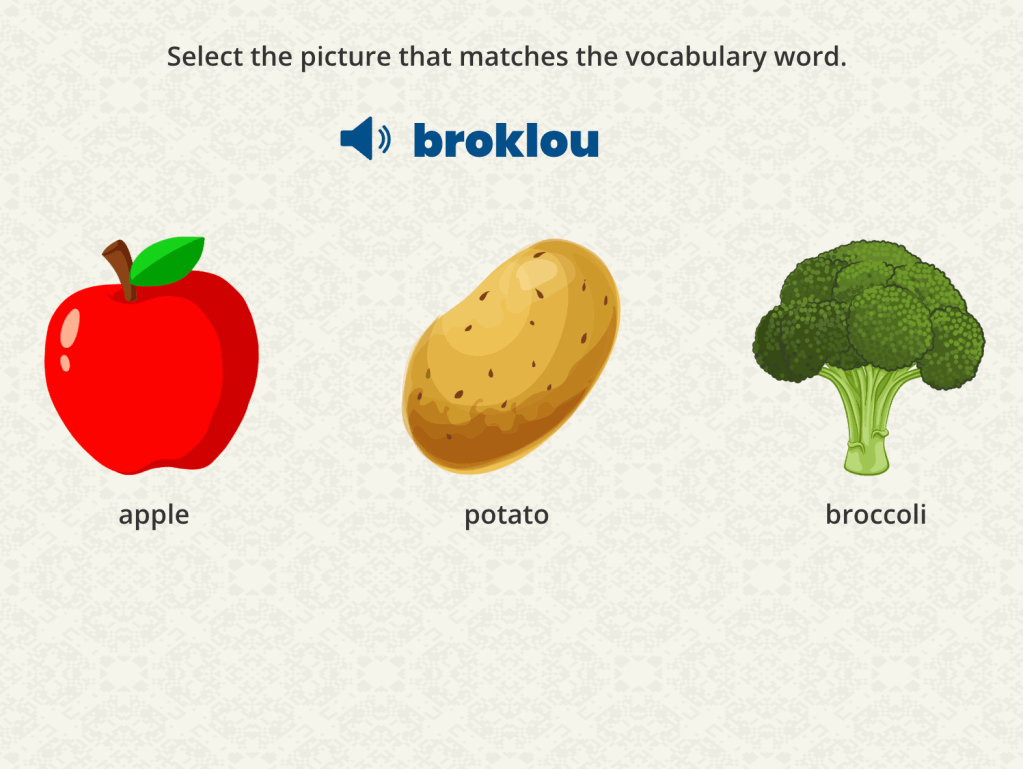
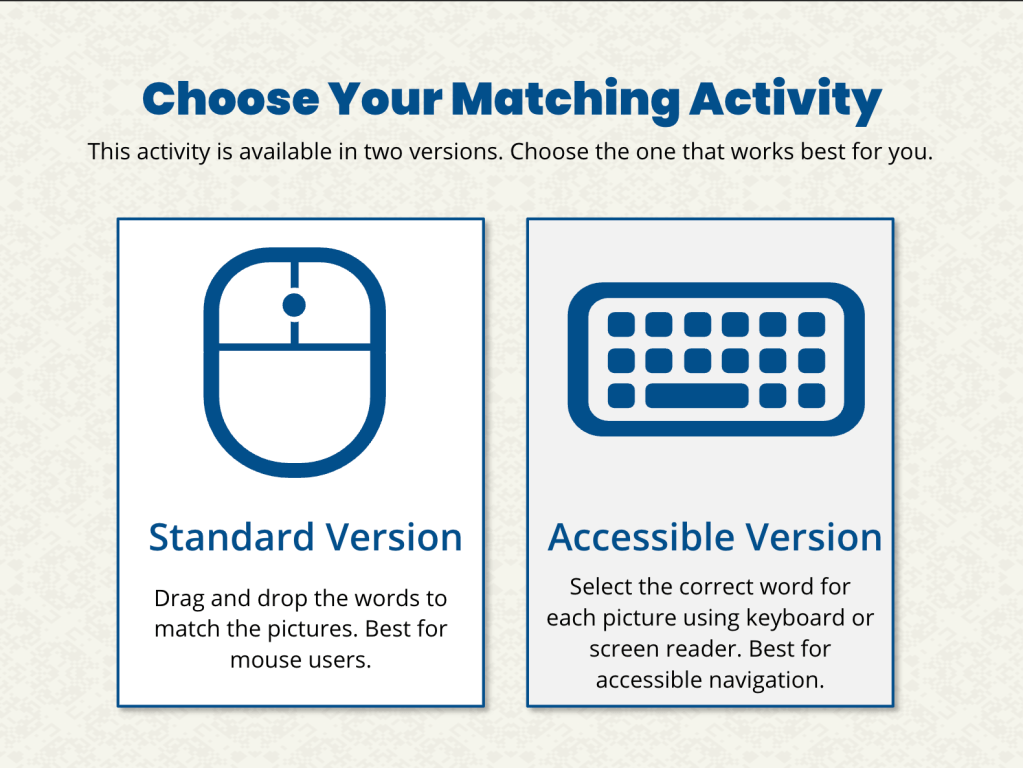
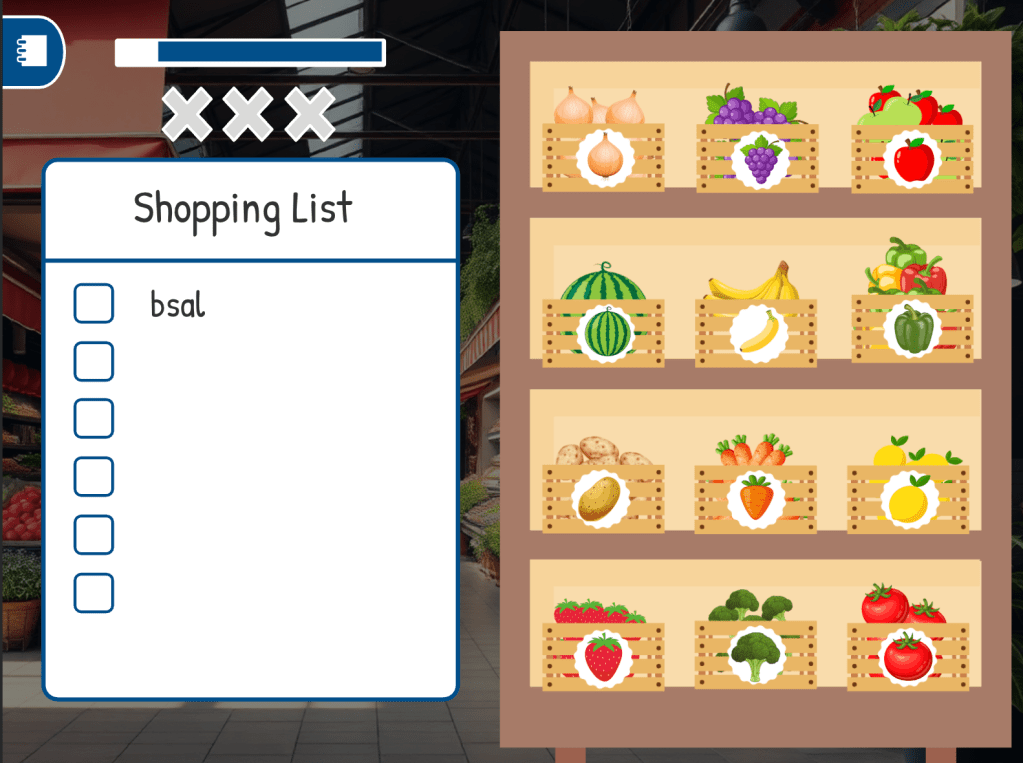
Learners begin by exploring new vocabulary words, then practice using them through a variety of interactive activities, including flashcards, matching, and a mini-shopping game. To accommodate different learner preferences, the practice menu allows learners to choose how they review, ensuring a personalized learning experience.
Accessibility was built into the design from the start. Each activity includes keyboard and screen reader compatibility, extended timers or timer-free options, and accessible versions of drag-and-drop interactions. This ensures that learners with different needs can fully participate without barriers. To make navigation smooth, I applied descriptive alt text and naming conventions, while maintaining engaging interactivity and gamified elements.
I also created all course graphics in Canva, designing visuals that were culturally relevant and cohesive to enhance the learner experience. The result is a course that combines real-world context, interactive learning, and accessibility by design to support all learners in building their vocabulary confidently.
The Process
I started with backward design, outlining the final assessment first and connecting it to a practical, real-world application: navigating a Tunisian market. From there, I built learning progressions using the progressive active teaching technique that starts with familiar words and gradually introduces more complex vocabulary that learners could figure out using prior knowledge.
To encourage active learning, I designed practice activities where learners do rather than simply read. For example, the mini-shopping game asks students to find and collect the correct foods from a list before time runs out, reinforcing recall under realistic conditions. Learners can also choose from multiple practice methods with flashcards, matching, or the grocery game, depending on their needs and learning styles.
By focusing on both learner engagement and accessibility, this project demonstrates how thoughtful design can create an eLearning experience that is interactive, inclusive, and practical for real-world use.
 Brooke Bockenstedt