Details
- Type: Interactive branching scenario
- Audience: New and emerging managers
- Client: Organizations looking to strengthen manager communication and performance
Tools
- We Are Learning
- Canva
- AI Tools
Skills
- Branching scenario scriptwriting
- AI response development

The Problem
Many new and early-career managers struggle to give effective feedback. When conversations feel awkward, vague, or overly corrective, employees may become defensive, disengaged, or unclear about expectations. Organizations also reported common pitfalls: managers focused on the person instead of the behavior, avoided tough conversations, or waited too long to address issues. As a result, performance problems repeated and team relationships suffered.
Managers needed a low-risk way to practice feedback conversations, build confidence, and learn strategies that support accountability while preserving trust.
The Solution
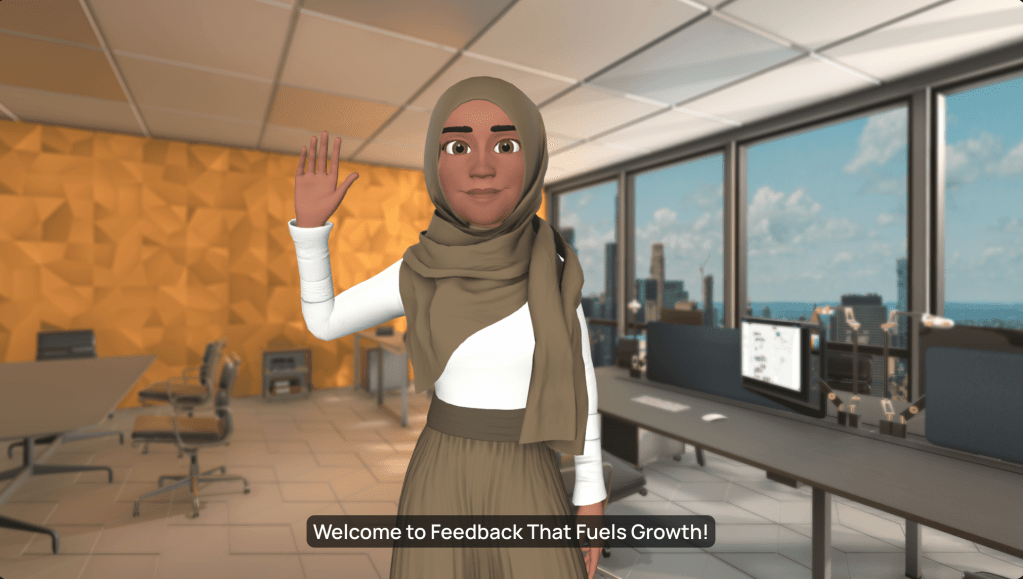
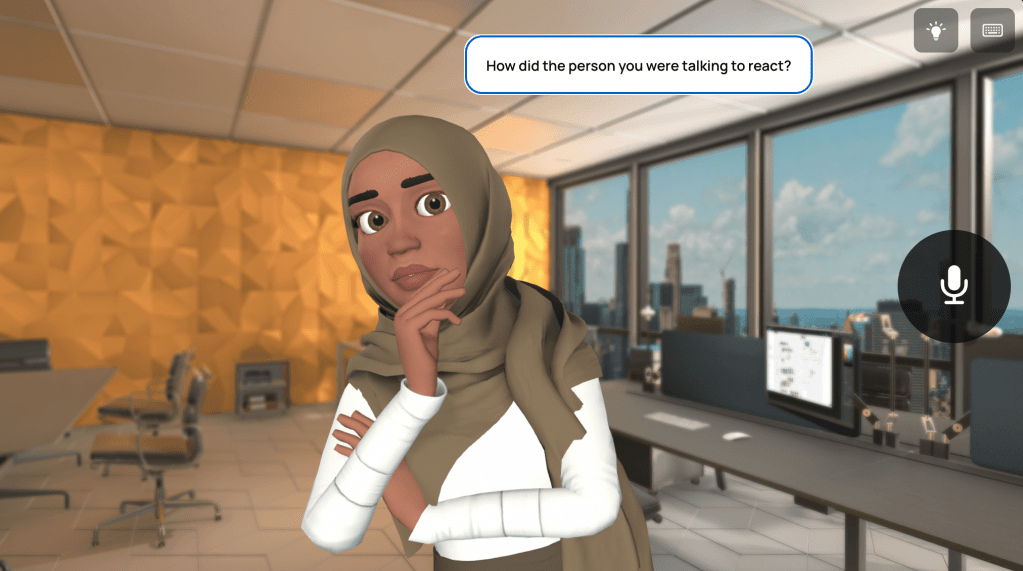
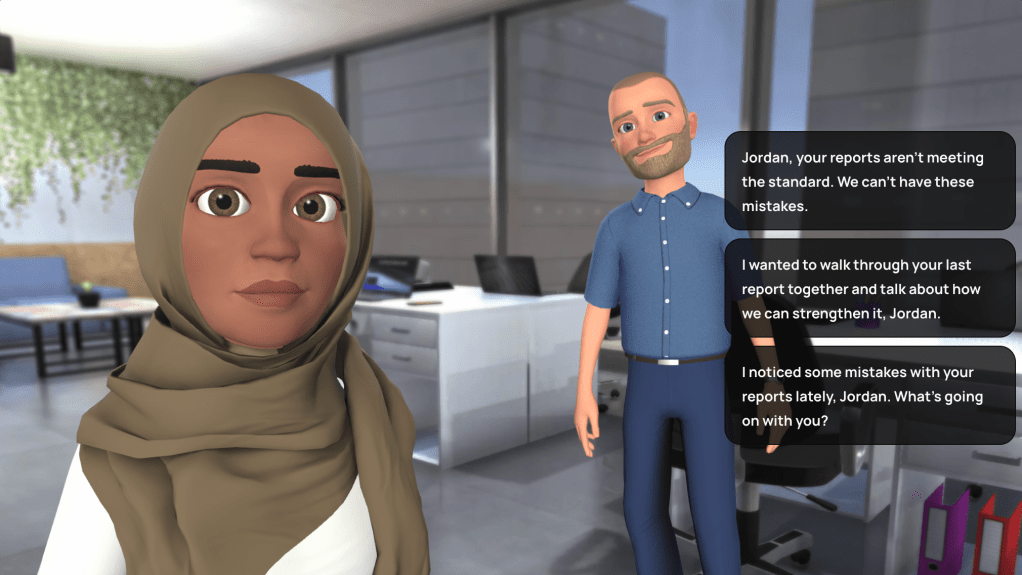
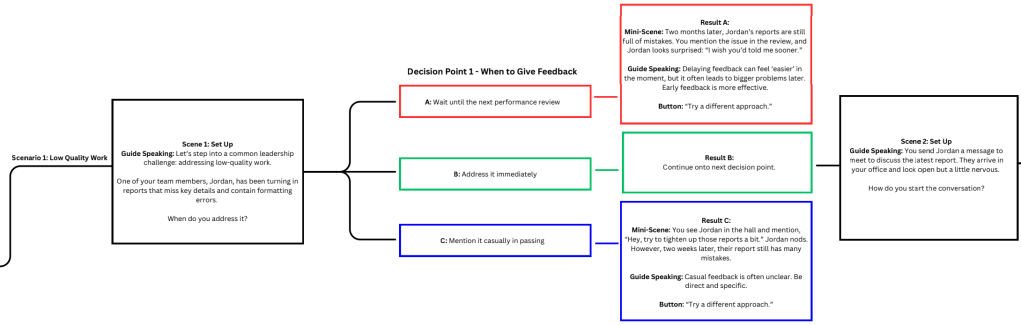
I designed this scenario-based learning experience that allows managers to practice real workplace conversations and see the impact of their choices in real time. Instead of passive tips or scripts, learners step into two realistic situations, low-quality work and team breakdowns, and choose how to respond at key decision points.
The experience emphasizes three core skills:
- Curiosity: seeking the employee’s perspective before reacting
- Clarity: focusing on specific behaviors, not assumptions or judgments
- Collaboration: working toward shared solutions and accountability
Each decision point provides:
- Branching dialogue
- Natural consequences
- Supportive coaching feedback
- Opportunities to retry without penalty
- A clear best practice pathway
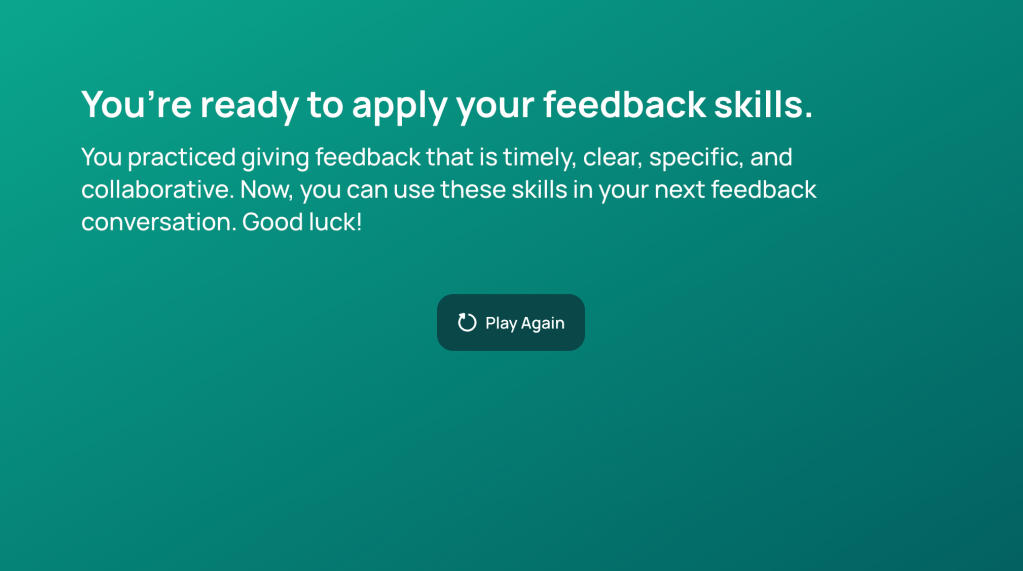
The module opens and concludes with guided reflection to help learners connect the activity and learning to their real workplace conversations.
This approach gives managers a safe space to practice, reflect, and build confidence before stepping into real conversations at work.
The Process
I began by defining the performance goal: managers should be able to hold feedback conversations that are timely, specific, clear, and collaborative. Using backward design, I mapped learning objectives to observable behaviors, then built scenarios that mirror common challenges.
From there, I:
- Scripted branching dialogue using realistic language.
- Designed decision points that revealed common missteps, leading to defensiveness, avoidance, and blame.
- Wrote AI-driven feedback that is conversational, supportive, and actionable.
- Created a reflection framework to help learners identify personal next steps.
- Built retry loops and growth-oriented coaching feedback to support psychological safety.
To ensure inclusivity and relevance, the scenarios center on behaviors and team dynamics, not personal traits, allowing the learner to focus on skills rather than stereotypes.
The result is a realistic, coached practice environment that blends choice, reflection, and guided feedback to help managers build confidence they can immediately apply to real conversations.
 Brooke Bockenstedt