Details
- Type: eLearning game and game guide
- Audience: Elementary school students
- Client: Elementary school counselors and teachers
Tools
- Canva
- Google Docs
Skills
- Game-based learning design
- Visual design and layout
- Instructional writing

The Problem
To support the development of social-emotional skills for elementary students, counselors and teachers had been using social scenarios during structured lessons. However, they needed a way for students to reinforce and apply these skills outside of formal counseling sessions. The solution needed to be fun, engaging, and easy to implement within the school day.
The client wanted:
- An engaging activity that promoted confidence, kindness, and positive self-esteem
- A way for students to practice social-emotional skills outside of direct instruction
- A resource that required minimal prep for educators and fit seamlessly into existing routines
The Solution
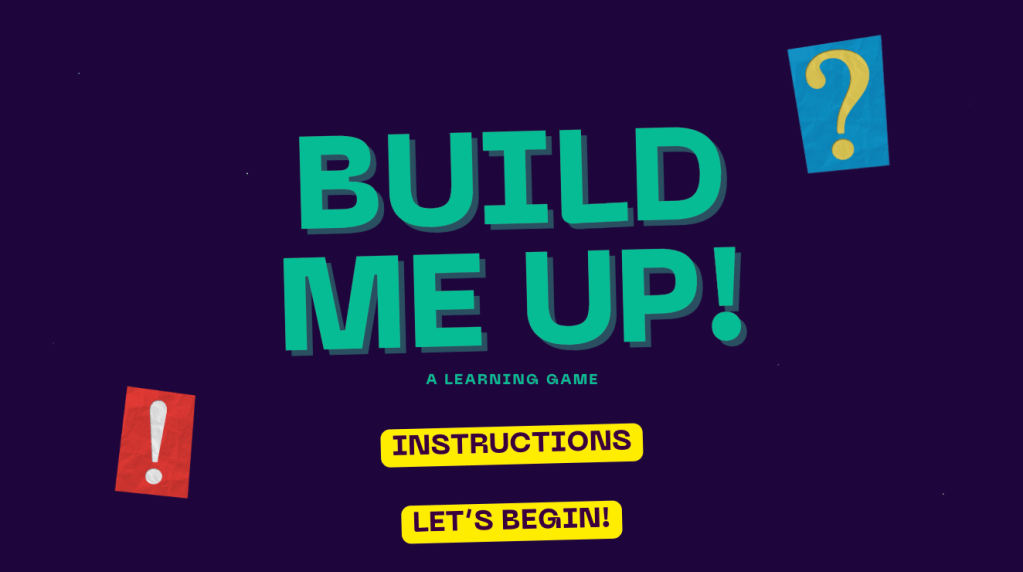
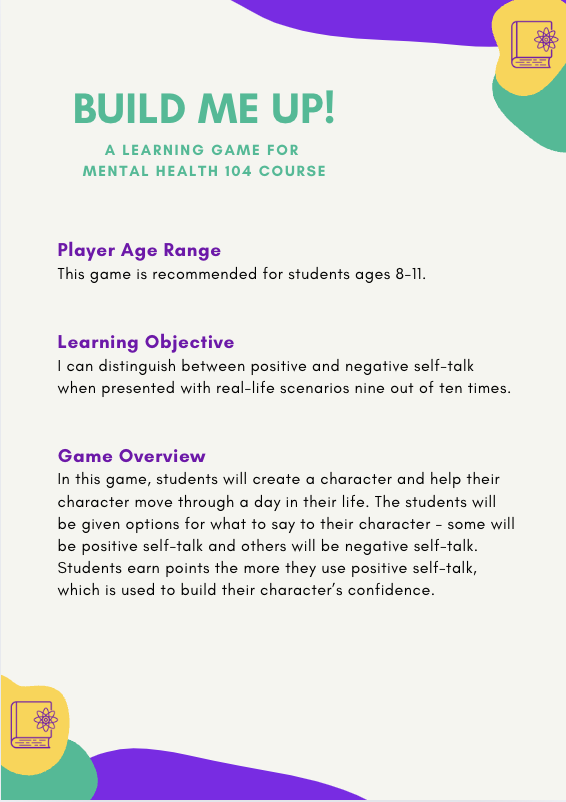
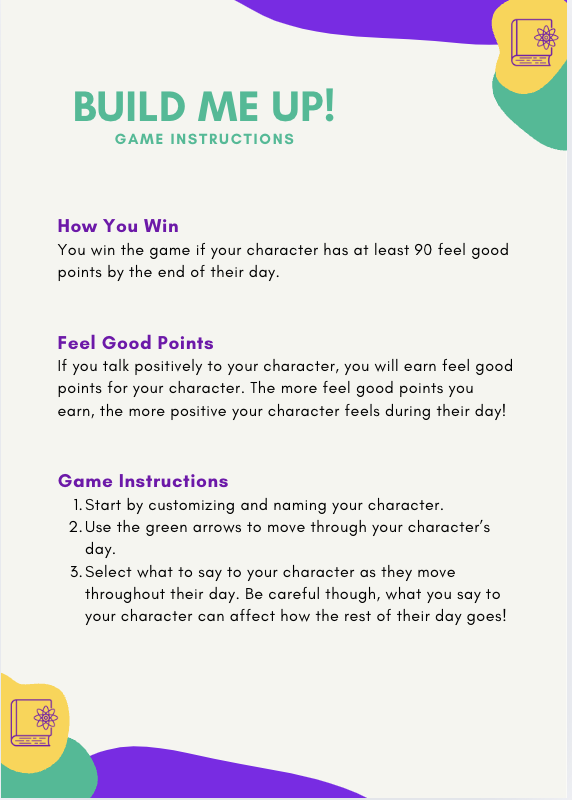
To meet this need, I designed Build Me Up!, an eLearning game that could accompany counseling lessons. Using Canva, I developed a printable Game Guide that provided everything educators needed to run the activity with their students.
The game:
- Encourages students to share positive affirmations and compliments with themselves and each other
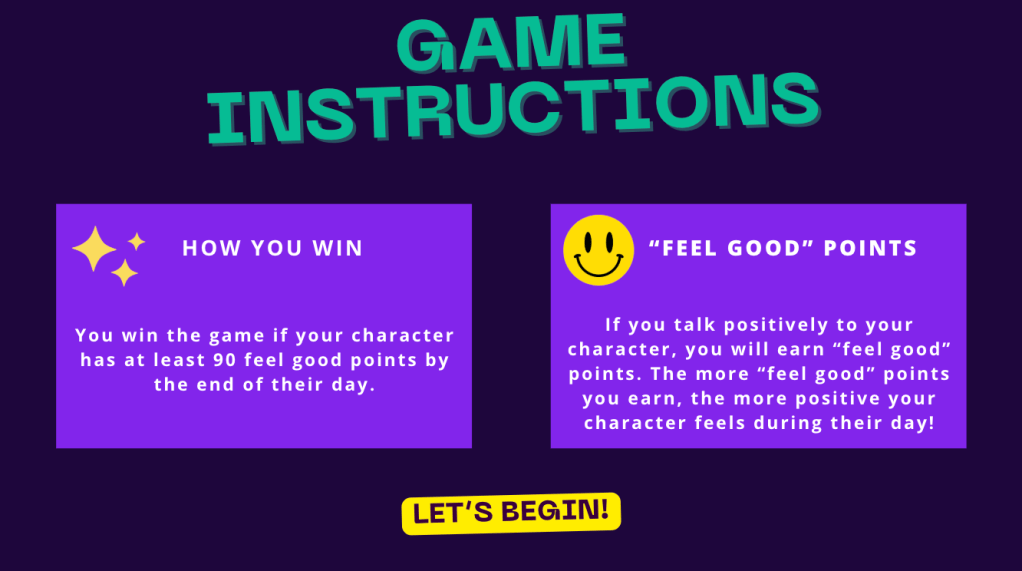
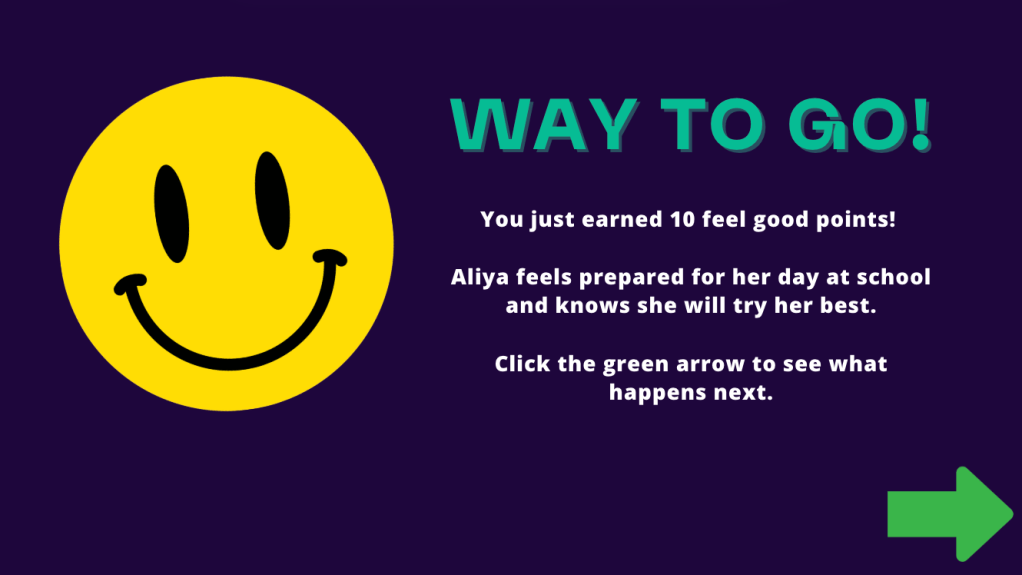
- Incorporates a “Feel Good Points” system that rewards kindness and reflection
- Includes flexible variations for independent use at school or at home
This solution encourages students to practice empathy, build confidence, and engage in positive self-talk in a playful and meaningful way, resulting in stronger social-emotional skills.
The Process
To ensure the game was both effective and easy to use for students and educators, I followed the ADDIE model.
Analyze: I conducted a needs analysis through surveys with teachers and school counselors to identify the most common social-emotional scenarios students faced. This feedback helped determine the content focus for the game scenarios. I also gathered contextual information about the school’s technology environment, learning that all students were issued iPads. This confirmed that an eLearning game would be an accessible and effective delivery format for all learners.
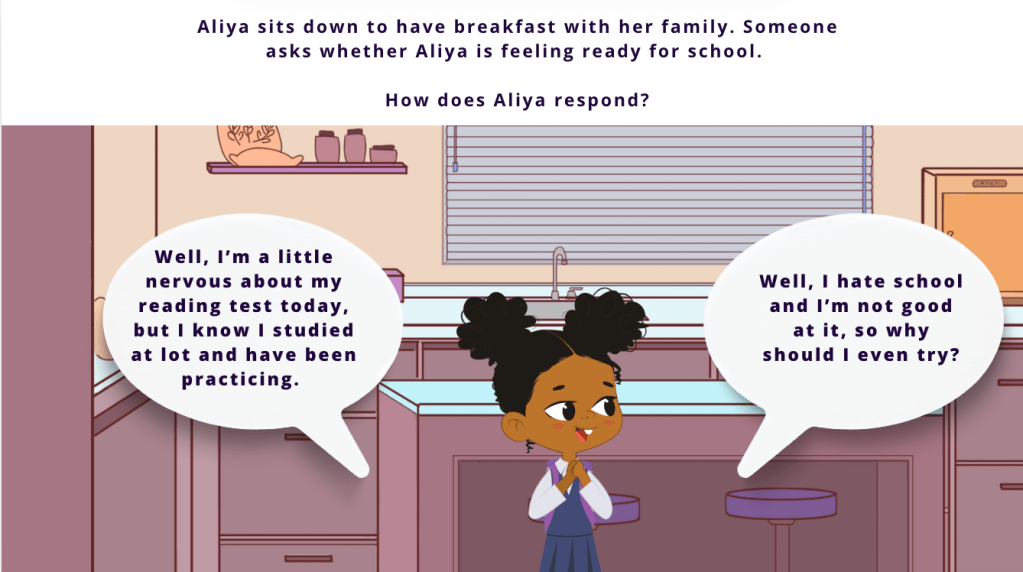
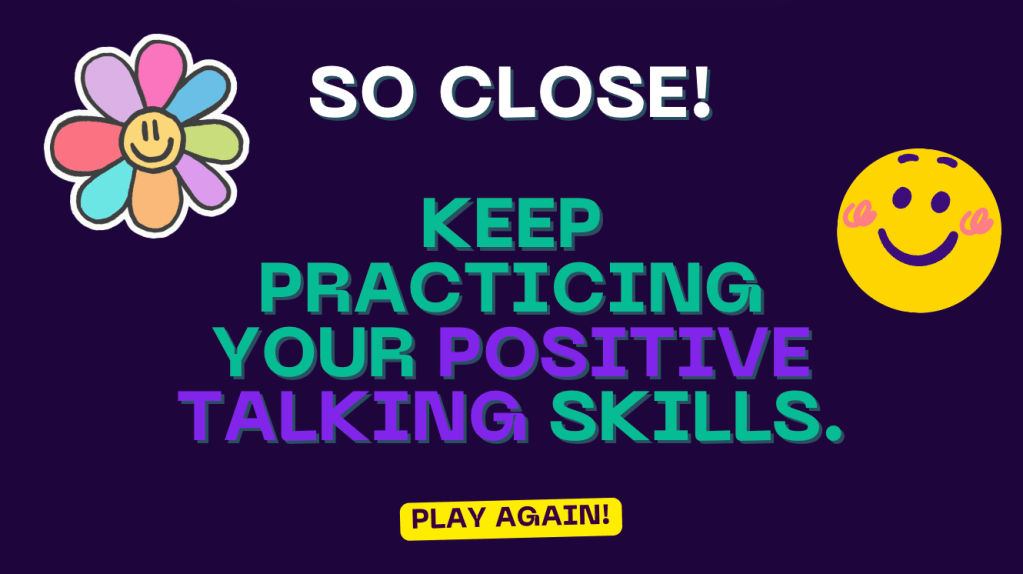
Design: Using the priority scenarios gathered during analysis, I mapped out a detailed storyboard for each scenario, outlining dialogue, character actions, and multiple possible student responses with corresponding consequences. I also designed a step-by-step Game Guide, which included a clear overview of the game’s purpose, learning objectives, and game instructions. This ensured both students and educators could use the resource with minimal onboarding time.
Develop: I created the text-based storyboard in Google Docs, making it easy to share for feedback during development. Canva was used to visually design the game, incorporating colorful graphics, relevant characters, and scenario-specific imagery. The Game Guide was also built in Canva, maintaining visual consistency with the game’s design for a cohesive learner experience.
Implement: The completed game was published as a shareable link, making it instantly accessible on iPads. Teachers and counselors were provided with the Game Guide.
Evaluate: To support future iterations of the game, teachers and counselors were able to submit feedback about learner engagement, game usability, and social-emotional skill improvement through a survey. This evaluation process established a feedback loop for refining scenario content, gameplay flow, and user experience.
 Brooke Bockenstedt